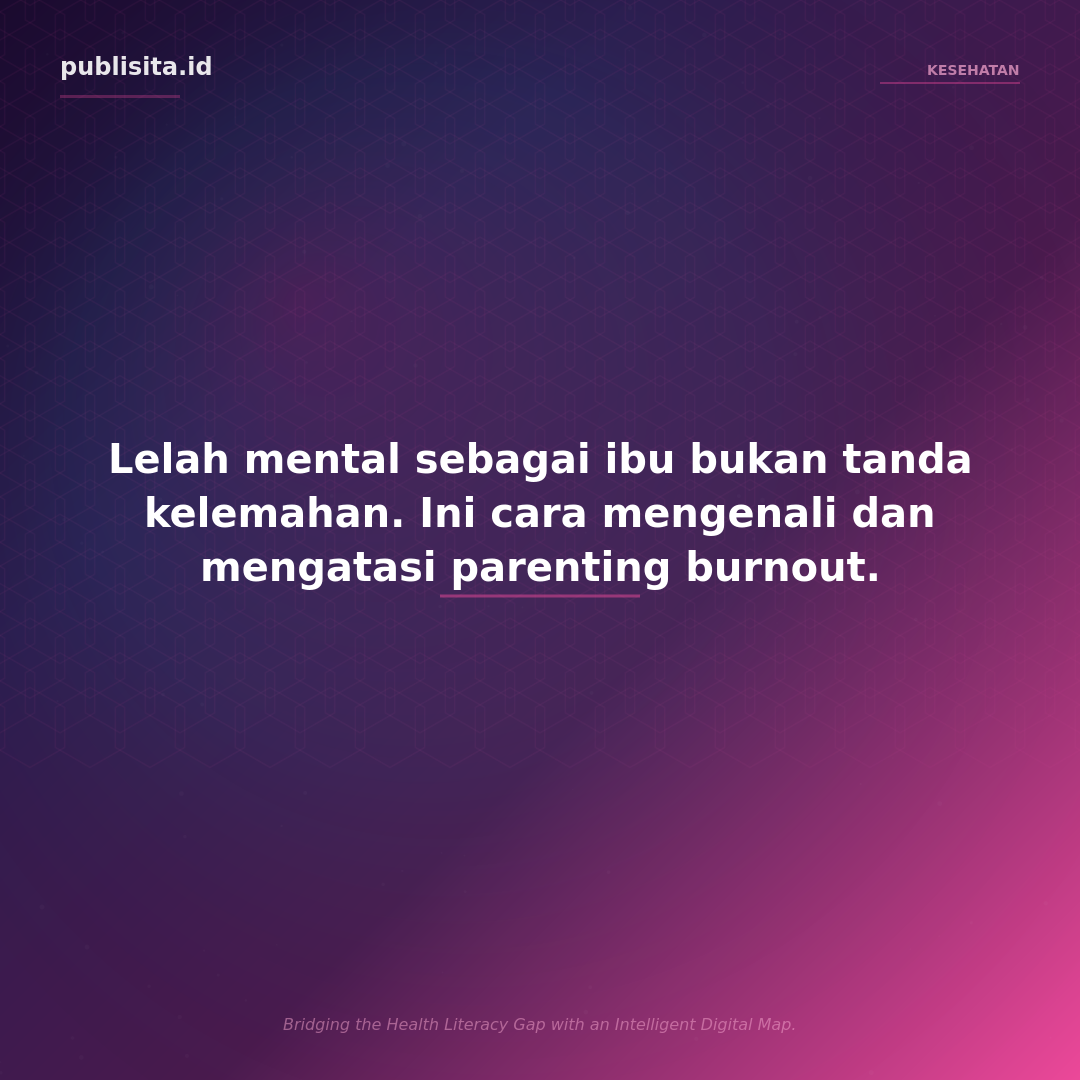
Mengatasi Kelelahan Mental: Tips Praktis untuk Ibu Mencegah Parenting Burnout
Menjadi ibu adalah perjalanan yang penuh kebahagiaan namun juga sangat menuntut. Bagi para ibu yang merasa kewalahan, tuntutan yang terus-menerus dapat berujung pada parental burnout. Mengenali tanda-tanda awal, seperti kelelahan kronis dan rasa terlepas secara emosional, sangatlah penting. Melalui strategi efektif seperti memprioritaskan perawatan diri, meminta bantuan, berlatih belas kasih pada diri sendiri, menyederhanakan jadwal, serta mengatur tidur dan sistem dukungan yang lebih luas, para ibu dapat menghadapi tantangan dengan ketangguhan dan menjaga kesejahteraan emosional.
Memahami Parental Burnout: Mengenali Tanda-Tanda Awal Kelelahan
▸ 📌 Intisari Artikel: Bagian 1
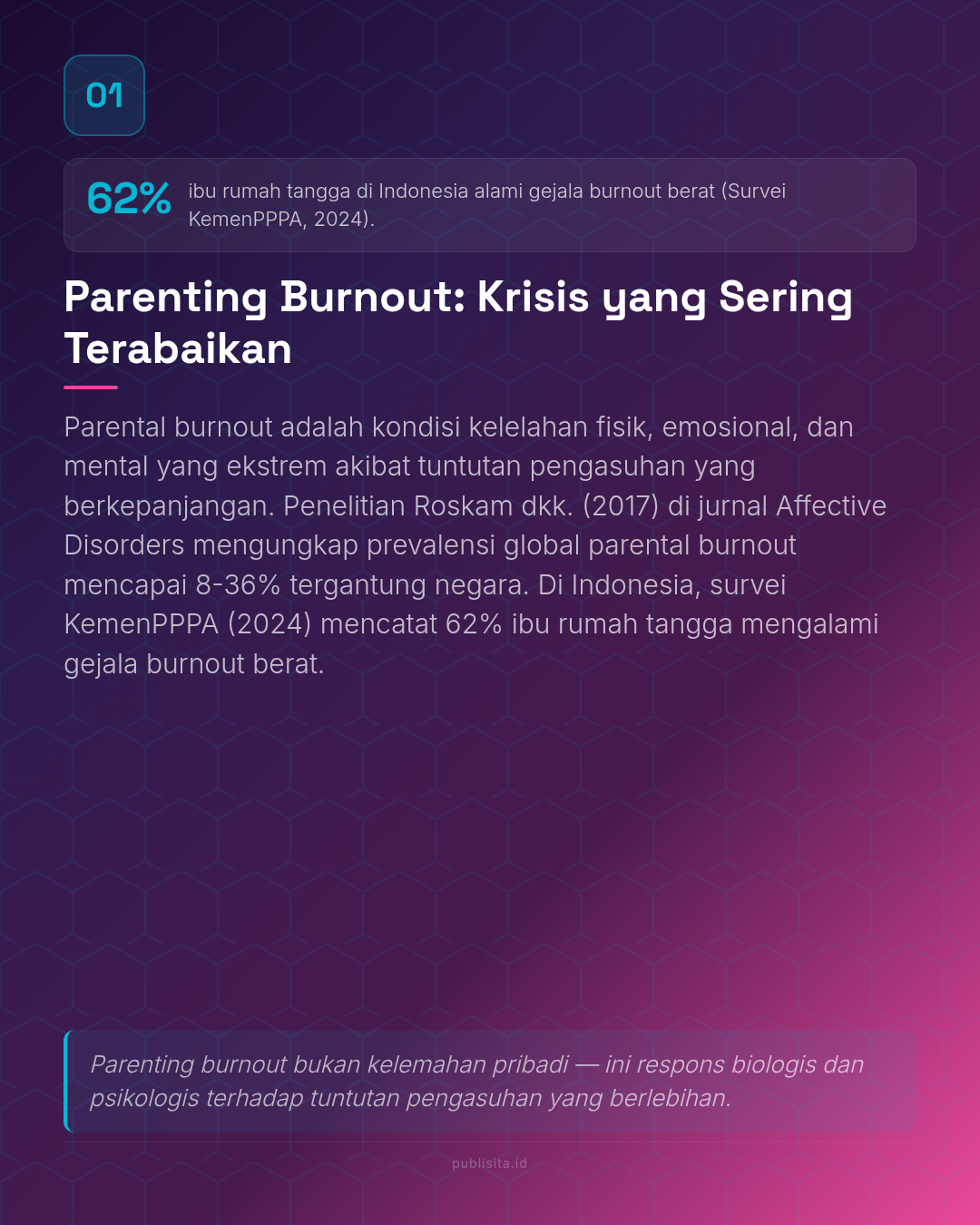
Parental burnout adalah perpaduan berbahaya dari kelelahan fisik, mental, dan emosional kronis yang sering kali merasuki kehidupan orang tua tanpa disadari. Tuntutan pengasuhan bisa mencapai titik didih di mana retakan kelelahan menjadi mustahil untuk diabaikan. Mengenali tanda-tanda ini sejak dini dapat membuat perbedaan besar dalam membuka jalan menuju intervensi dan pemulihan yang efektif. Mari kita telusuri indikator utama parental burnout, memberikan wawasan krusial untuk mengelolanya sebelum masalah berkembang lebih dalam.
Inti dari parental burnout adalah kelelahan fisik yang tak henti-hentinya. Banyak orang tua merasa bangun tidur dengan rasa lelah yang terus-menerus, meskipun sudah tidur semalaman penuh. Kelelahan ini bermanifestasi melalui berbagai keluhan fisik: insomnia, sakit kepala, ketegangan otot, masalah pencernaan, ruam kulit, dan sistem kekebalan tubuh yang lemah menyebabkan sering masuk angin atau flu. Setiap hari baru bisa terasa berat, dengan tugas-tugas sederhana yang terasa tak tertahankan. Tingkat kelelahan ini tidak hanya menguras energi tetapi juga berpotensi membuat rutinitas harian hampir tidak tertahankan.
Di medan pertempuran emosional dan mental, burnout tampak melalui serangkaian gejala. Orang tua mungkin merasa semakin mudah tersinggung, membentak anak tanpa alasan yang jelas, atau merasakan frustrasi yang meluas. Kegembiraan yang dulu menyertai tugas pengasuhan bisa berubah menjadi bayang-bayang, digantikan oleh keterlepasan emosional dan mati rasa. Kecemasan, depresi, dan campuran berbahaya dari rasa bersalah karena tidak memenuhi standar pengasuhan yang ditetapkan sendiri sering kali ikut serta. Pengambilan keputusan menjadi lamban; pikiran menjadi kacau, dan motivasi menguap. Gejolak emosional dan mental ini tidak hanya mempengaruhi persepsi diri tetapi juga kualitas interaksi dengan anak, di mana momen koneksi yang dulu memuaskan kini terasa dipaksakan atau hampa.
Aspek perilaku dan relasional dari burnout juga sama nyatanya. Orang tua mungkin melihat lonjakan konflik, baik dengan pasangan maupun dalam diri mereka sendiri, saat mereka bergulat dengan meningkatnya kebencian terhadap peran dan tanggung jawab mereka. Penarikan diri dari sosial menjadi pelarian yang akrab, karena berinteraksi dengan teman dan keluarga terasa lebih seperti beban daripada hiburan. Dalam skenario ekstrem, beberapa mungkin mencari pelarian dalam kebiasaan tidak sehat, seperti alkohol atau penyalahgunaan zat, dipicu oleh perasaan terperangkap atau sensasi terus-menerus berada dalam “mode bertahan hidup.”
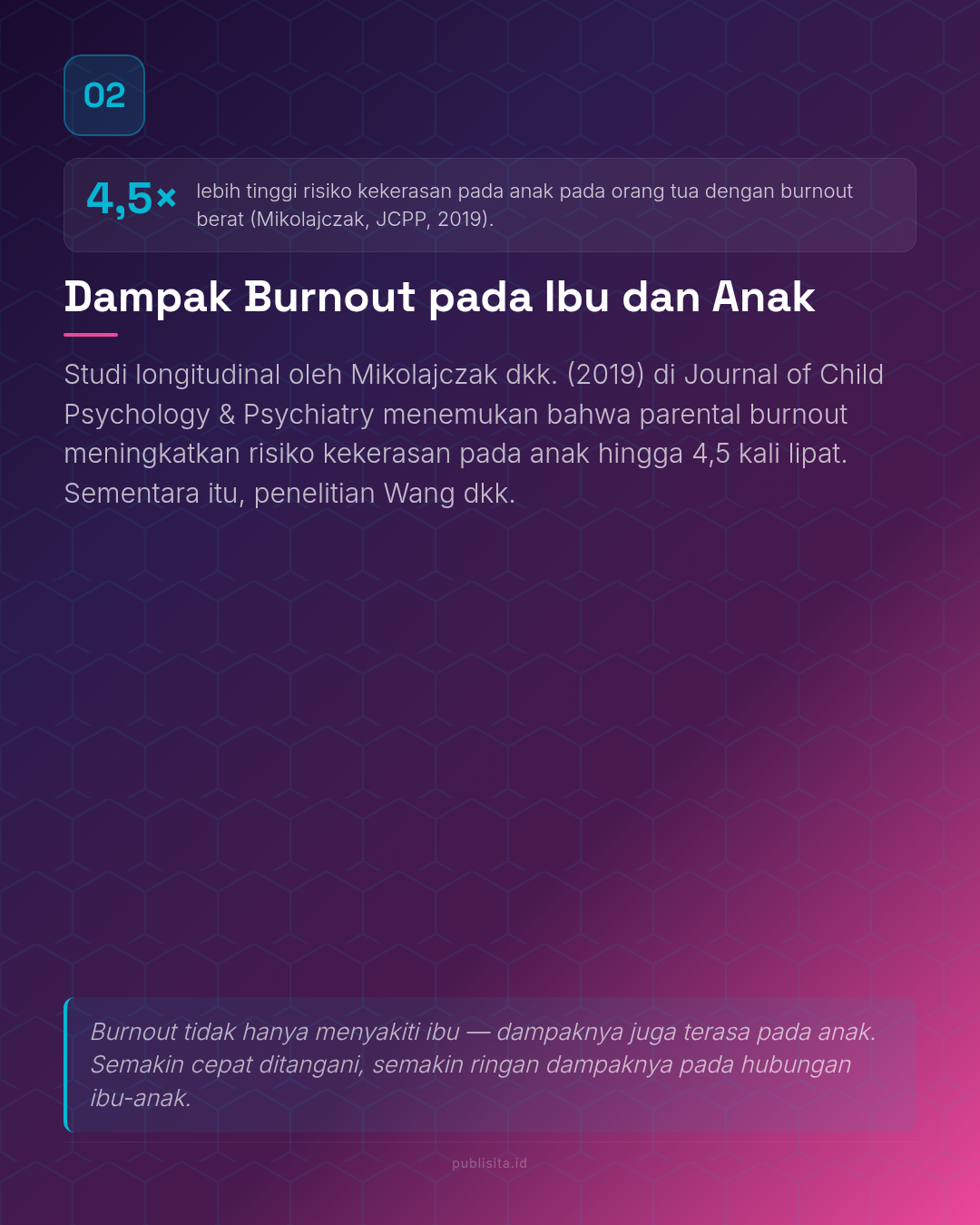
Khusus bagi ibu, tuntutan ini bisa semakin besar dalam konteks tekanan tinggi, seperti mengelola pekerjaan di samping pengasuhan, atau merawat anak-anak yang memiliki kebutuhan emosional atau kesehatan mental khusus. Tekanan untuk terus menyeimbangkan, tanpa goyah, sering menyebabkan ibu menyimpan dendam atau perasaan ketidakadilan dalam tanggung jawab bersama. Mengatasi tekanan ini dimulai dengan mengenali dan menerima tanda-tanda burnout, memungkinkan penyesuaian yang diperlukan seperti menetapkan batasan yang tegas, melakukan perawatan diri, dan mencari dukungan dari teman sebaya atau profesional.
Dengan memahami manifestasi multispektral dari parental burnout, para ibu. dan juga ayah. dapat lebih siap untuk melakukan intervensi sebelum mencapai titik puncak. Dengan mengembangkan kesadaran akan tanda-tanda awal ini, orang tua dapat memutus siklus burnout dan mencari jalan menuju ketangguhan dan kepuasan dalam perjalanan pengasuhan mereka. Bagi mereka yang ingin memperdalam pemahaman, tersedia banyak sumber daya yang menguraikan strategi komprehensif untuk mengatasi burnout.
Penutup
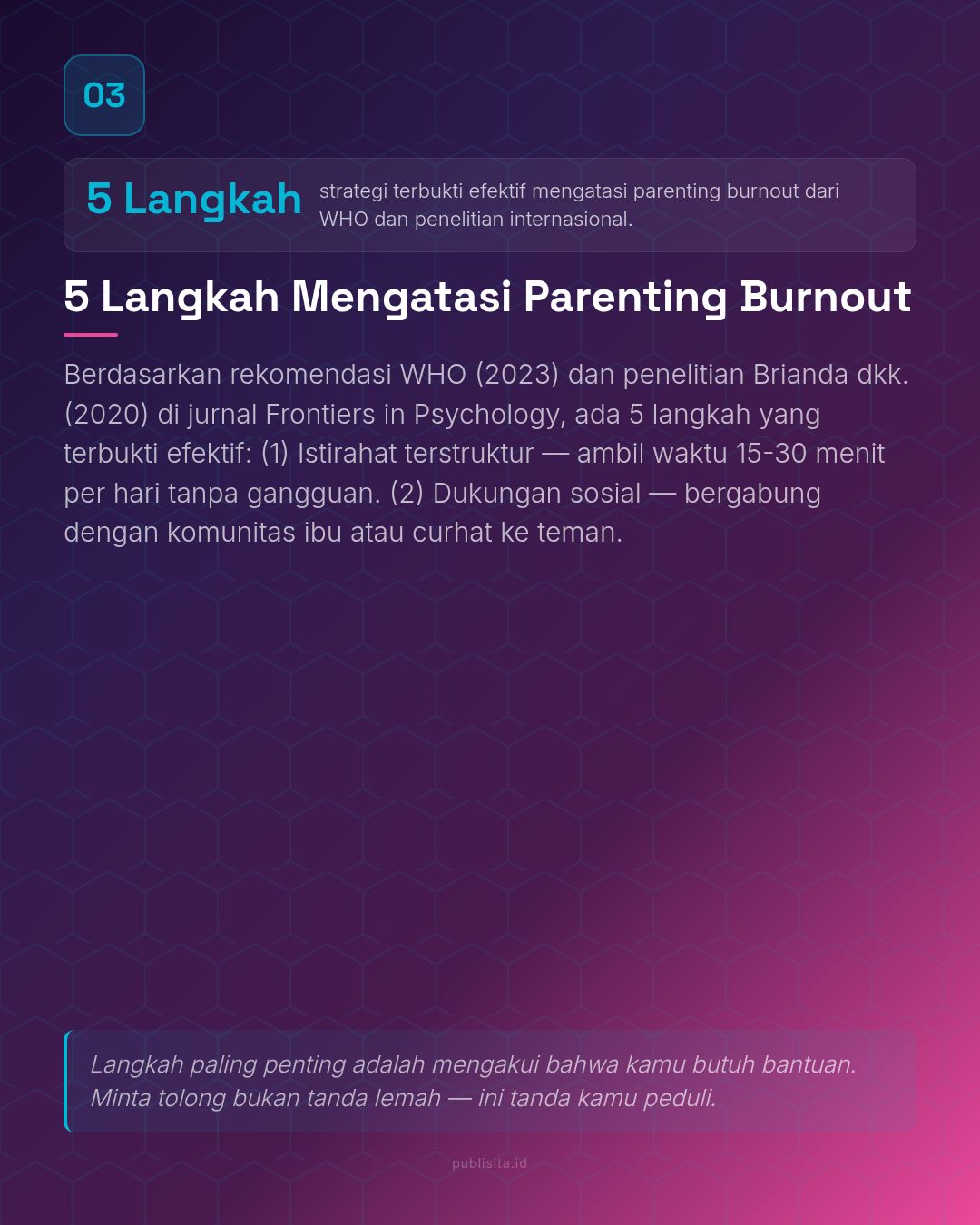
Dengan mengenali tanda-tanda parental burnout dan menerapkan strategi praktis, para ibu dapat secara efektif mengelola stres dan memulihkan kesejahteraan mereka. Perubahan kecil, dari mencari bantuan hingga memprioritaskan perawatan diri, dapat membuat perbedaan signifikan dalam mencegah burnout. Ingatlah, menjaga keseimbangan adalah kunci, dan meminta dukungan adalah kekuatan, bukan kelemahan.
Siap Mengubah Hidup Anda dan Kesehatan Keluarga? Dari kesuburan hingga tumbuh kembang anak, temukan semua wawasan terpercaya dan berbasis bukti yang Anda butuhkan dalam satu tempat. Jadikan kami panduan harian Anda menuju Kualitas Hidup yang lebih baik!
Tentang Kami
Kami adalah sumber daya tepercaya dan berbasis bukti yang berdedikasi untuk meningkatkan Kualitas Hidup melalui wawasan tentang kesehatan reproduksi, tumbuh kembang anak, dan kesejahteraan perempuan. Misi kami adalah menjadi panduan harian Anda dalam membuat keputusan cerdas, mencakup segala hal dari tantangan kesuburan hingga pengasuhan sadar. Kunjungi kami sekarang dan mulailah transformasi Anda menuju kehidupan yang lebih sehat dan berkualitas lebih tinggi untuk keluarga Anda hari ini.
