
Be Careful! Understanding the Dangers of Sexting and How to Protect Yourself Online
With the advent of digital communication, sexting has become a prevalent activity among teens, posing numerous risks that parents need to understand. While it may seem like a private exchange between two individuals, sexting carries significant dangers, from privacy violations and emotional distress to severe legal implications, especially for minors. This article delves into the multifaceted risks of sexting, equipping parents with essential knowledge to protect their children. Parents will learn about the permanent nature of digital content, the emotional and psychological toll sexting can take, and the crucial steps needed to safeguard privacy and engage in meaningful discussions with their teens.
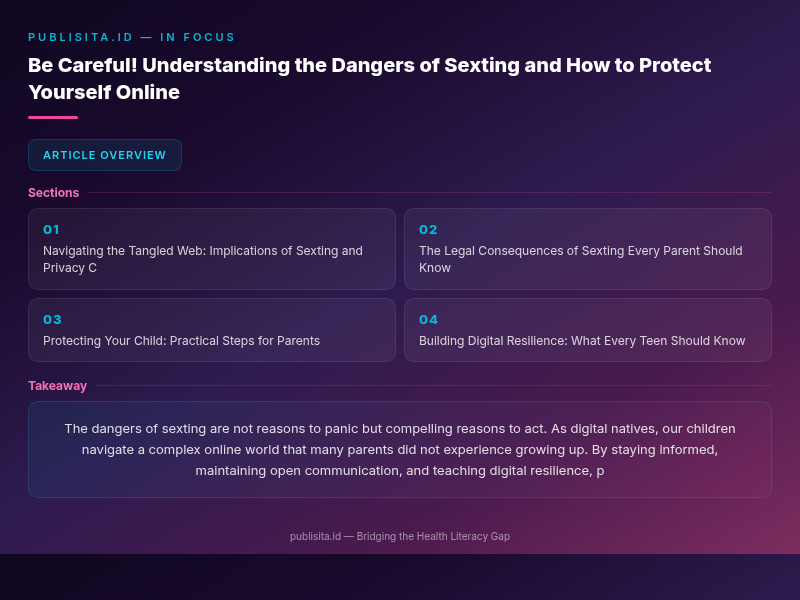
Infografik: Ringkasan visual artikel. Sumber: publisita.id & penelitian terkait.
Navigating the Tangled Web: Implications of Sexting and Privacy Concerns

Sexting has become an intricate part of adolescent life, yet it carries a perilous potential beyond the deceptively simple act of sending intimate messages. In the digital era, where each message, image, or video has lasting repercussions, understanding the implications of sexting is essential.
The most striking concern is the impact on mental health. Studies reveal that adolescents engaging in sexting are far more susceptible to a myriad of issues including suicidal thoughts and body image disorders. The correlation between sending sexts and enduring mental health challenges is significant, as the social pressure to engage in such risky behavior often comes with detrimental effects. This vulnerability also extends to risky sexual behaviors and substance misuse, paving the way for long-term emotional difficulties. Consequently, the digital footprint left by sexting can haunt individuals, exacerbating low self-esteem and contributing to complex mental health struggles.
Perhaps what compounds these mental health issues is the persistent threat of privacy violations and victimization. Digital messages that were once private can quickly become public, often without knowledge or consent, leading to severe consequences. The pervasive risk of intimate images being shared non-consensually opens the door to bullying, anxiety, and exploitation. issues that are alarmingly common among sexting teens. Research highlights a prominent pattern of image misuse, with females in particular facing heightened vulnerability.
The social dimensions of sexting further muddy the waters. Respect for privacy is often tangled with subjective social norms and the perceived security of relationships. Trust becomes fragile, particularly when relationships sour or images circulate beyond a trusted circle. This breach of trust underscores the importance of established boundaries and understanding that digital content, once shared, can never truly be deleted.
The Legal Consequences of Sexting Every Parent Should Know
One of the most overlooked yet severe consequences of sexting among minors is the legal implications. In many jurisdictions, including Indonesia, possessing or distributing explicit images of minors. even if self-produced. can result in serious legal charges such as child pornography distribution. Under Indonesia’s Electronic Information and Transactions (ITE) Law and the Child Protection Act, teens who share explicit images of themselves or others may face criminal prosecution, including potential jail time and mandatory registration as a sex offender.
What many parents do not realize is that the legal system does not always distinguish between malicious intent and consensual sharing among peers. A 16-year-old who forwards a photo received from their boyfriend could be charged with distributing child pornography just as severely as an adult predator. This legal reality creates enormous stress and anxiety for young people who may not understand the gravity of their digital actions. School administrators are increasingly involved in sexting cases, often implementing disciplinary measures that can include suspension or expulsion, potentially affecting college admissions and future career opportunities. Legal experts strongly recommend that parents educate themselves about local sexting laws and have open, non-judgmental conversations with their teens about the legal ramifications.
Protecting Your Child: Practical Steps for Parents
While the dangers of sexting are real and significant, there are concrete steps parents can take to protect their children and build a foundation of trust and open communication. The most important factor is creating a home environment where teens feel comfortable discussing uncomfortable topics without fear of punishment or judgment.
Start by having age-appropriate conversations about digital boundaries early. Before giving your child a smartphone, discuss the permanence of digital content and establish clear rules about what is appropriate to share online. Use real-world examples to illustrate how a single image can spread beyond control. Teach your children that their body is private and that they have the right to say no to any request for intimate images, even from romantic partners. Role-play scenarios where they might feel pressured to send a photo and practice assertive refusal responses.
Utilize parental control tools and monitoring apps, but do so transparently. explain to your teen that these tools are for their safety, not for invading their privacy. Set boundaries around phone use, such as keeping devices in common areas overnight and limiting screen time. Encourage your child to come to you immediately if they ever feel pressured, threatened, or uncomfortable about any digital interaction, and assure them that your priority is their safety, not punishment.
Building Digital Resilience: What Every Teen Should Know
Beyond parental supervision, teens themselves need to develop digital resilience. the ability to navigate online spaces safely and recover from negative experiences. Digital resilience starts with critical thinking about what they share online. Teach your teen to ask themselves three questions before sending any photo or message: Would I be comfortable if my parents saw this? Would I be okay if my teachers saw this? Would I be okay if this appeared on the internet forever? If the answer to any of these is no, they should not send it.
Equip your teen with knowledge about digital consent and privacy settings on platforms like Instagram, TikTok, and WhatsApp. Show them how to lock down their accounts, block unwanted contacts, and report inappropriate content. Discuss the concept of “digital tattoo”. how everything posted online contributes to a permanent digital identity that colleges, employers, and future partners may one day see. Peer pressure is one of the strongest drivers of sexting behavior among teens. Help your child identify healthy friendships and romantic relationships where they feel respected rather than coerced.
For more parenting strategies in the digital age, read our guide on screen time recommendations for parents and understanding how technology affects adolescent health.
Conclusion: Moving Forward with Awareness
The dangers of sexting are not reasons to panic but compelling reasons to act. As digital natives, our children navigate a complex online world that many parents did not experience growing up. By staying informed, maintaining open communication, and teaching digital resilience, parents can significantly reduce the risks their children face. Remember that shame and punishment are not effective protective strategies. education, trust, and ongoing conversation are the most powerful tools parents have to keep their children safe in the digital age.
