Introduction
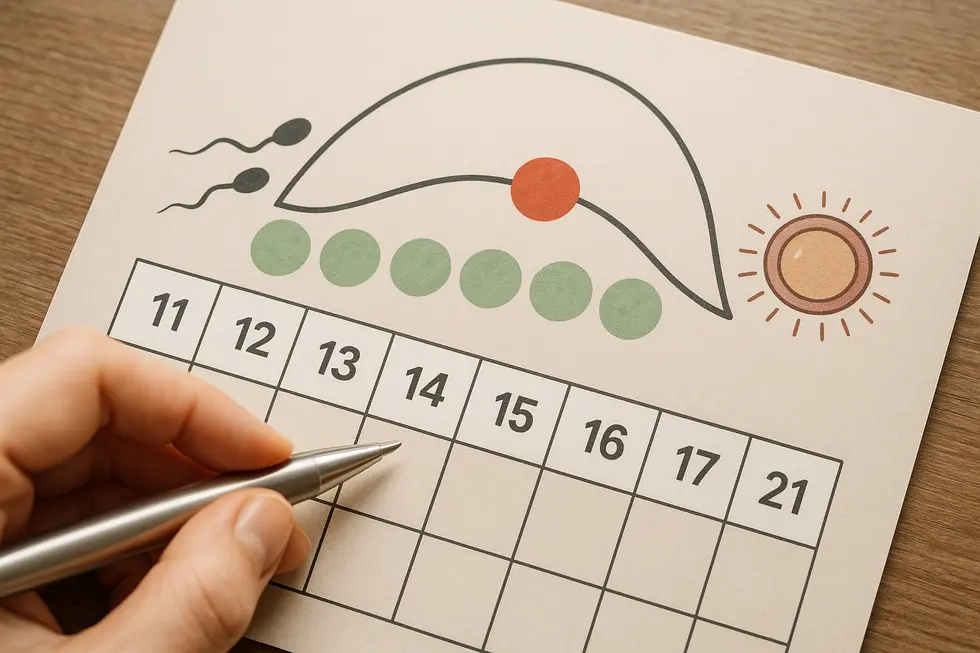
Understanding your body’s fertility window is essential for family planning, whether you’re trying to conceive or prevent pregnancy. This period, which spans the five days leading up to ovulation plus the ovulation day itself, significantly impacts your chances of conception. The fertility window is intricately linked to the life spans of sperm and the egg, making these days critical for successful fertilization. This chapter will detail the specifics of the fertility window, how it is connected to the timing of ovulation, and why individual variances can affect its predictability.
Cycle Variability: Decoding Its Influence on the Fertility Window and Ovulation
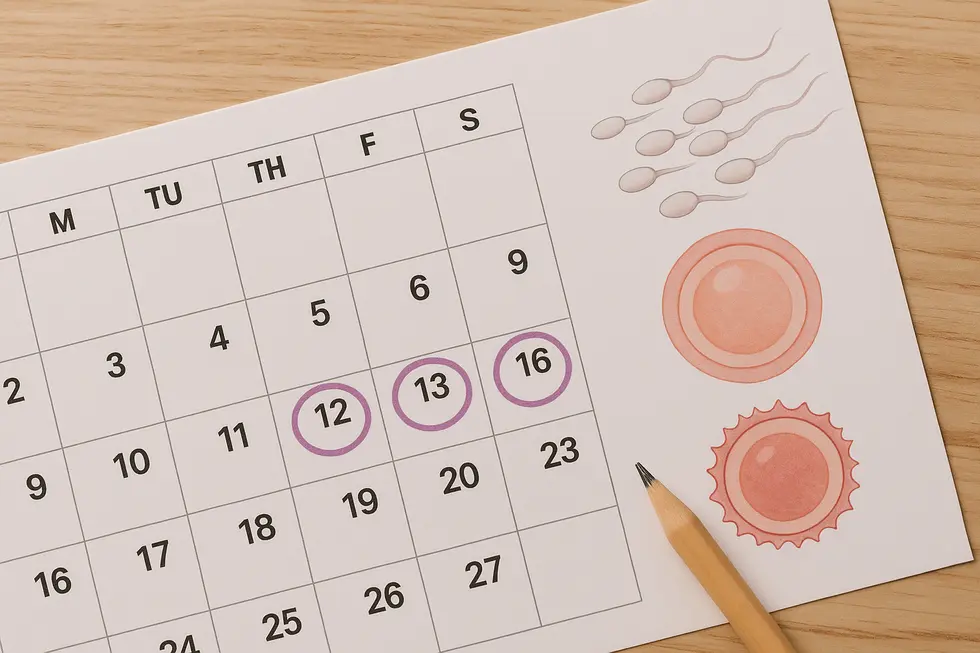
Cycle variability is a natural factor that adds layers of complexity to understanding the fertile window’s timing in relation to ovulation day. A woman’s menstrual cycle is often depicted as a neat, 28-day cycle where ovulation, the release of an egg from the ovaries, occurs precisely mid-cycle on day 14. However, in reality, it varies for each individual, with cycles ranging from 21 to 35 days. This variability can cause shifts in the fertile window, making it vital to comprehend its impact on conception potential.
Ovulation typically occurs about 14 days before the onset of the next menstrual period. This consistent interval nearly defines the length of the luteal phase, which is more stable compared to the follicular phase preceding ovulation. As a result, women with shorter cycles might ovulate as early as day 7, whereas those with longer cycles may ovulate around day 21. Understanding this shifting timeline is crucial because the fertile window is intrinsically tied to the timing of ovulation.
The fertile window spans a critical period of up to six days, encompassing the five days before ovulation and the day of ovulation itself. It is crafted to exploit the lifespan of sperm, which can live up to five days in a conducive cervical environment, and the brief viability of an egg, which is around 12 to 24 hours post-ovulation. In shorter cycles, the fertile window commences early, while in longer cycles, it begins much later, yet it consistently includes the five days leading up to and including the ovulation day.
Predicting this window amidst cycle variability can be challenging, especially for those with irregular cycles. Traditional methods like the calendar method try to approximate this period by subtracting 18 days from the length of the shortest cycle and 11 days from the longest over a six-month tracking period. However, natural fluctuations mean that no prediction method is foolproof. Using this approach, cycles ranging from 18 to 31 days would suggest fertile days fall between the 10th and 20th days, a range that accommodates most natural deviations but lacks precision for some women.
To enhance accuracy, individuals can leverage tools such as basal body temperature tracking, cervical mucus monitoring, and even ovulation predictor kits. These methods are particularly beneficial in refining the estimate of actual ovulation day, thereby allowing women to identify their personal patterns and manage their fertility more effectively. For instance, a rise in basal body temperature usually confirms ovulation, whereas changes in cervical mucus can indicate the approach of this fertile phase.
For women experiencing significant cycle variability, combining multiple tracking methodologies can provide better insights than relying on a singular method. It’s important to note that while the fertile window’s estimation is beneficial for those seeking pregnancy, it can also serve those avoiding conception. For instance, engaging in sexual intercourse 1-2 days prior to ovulation gives the highest chances for conception, aligning actions with fertility predictions, yet abstaining or using contraception during these phases could prevent unintended pregnancies.
While individualized tracking of cycle patterns is advantageous, it is not without its challenges. Irregular cycles may hinder the accuracy of ovulation predictions, making professional medical advice an appealing option for women facing such difficulties consistently. Ultimately, understanding the nuances of one’s menstrual cycle can empower better reproductive choices, providing clarity on optimal times for conception or contraception planning.
For those interested in exploring cycle tracking further, resources such as Ovulation Calender and the American College of Obstetricians and Gynecologists offer comprehensive guides on fertility awareness.
Final thoughts
Being aware of the fertility window and its timing relative to ovulation can greatly improve understanding and planning for both conception and contraception. By identifying this crucial period within each cycle, individuals can better manage their reproductive goals. While prediction tools offer assistance, consulting healthcare professionals can ensure more personalized advice, especially for those with irregular cycles.
Ready to Transform Your Life and Your Family’s Health? From fertility to child development, find all the trusted, evidence-based insights you need in one place. Make us your daily guide to a better Quality of Life!
About us
We are the trusted, evidence-based resource dedicated to improving Quality of Life through insights on reproductive health, child development, and women’s well-being. Our mission is to be your daily guide in making smart decisions, covering everything from fertility challenges to conscious parenting. Visit us now and begin your transformation toward a healthier and higher quality of life for your family today.