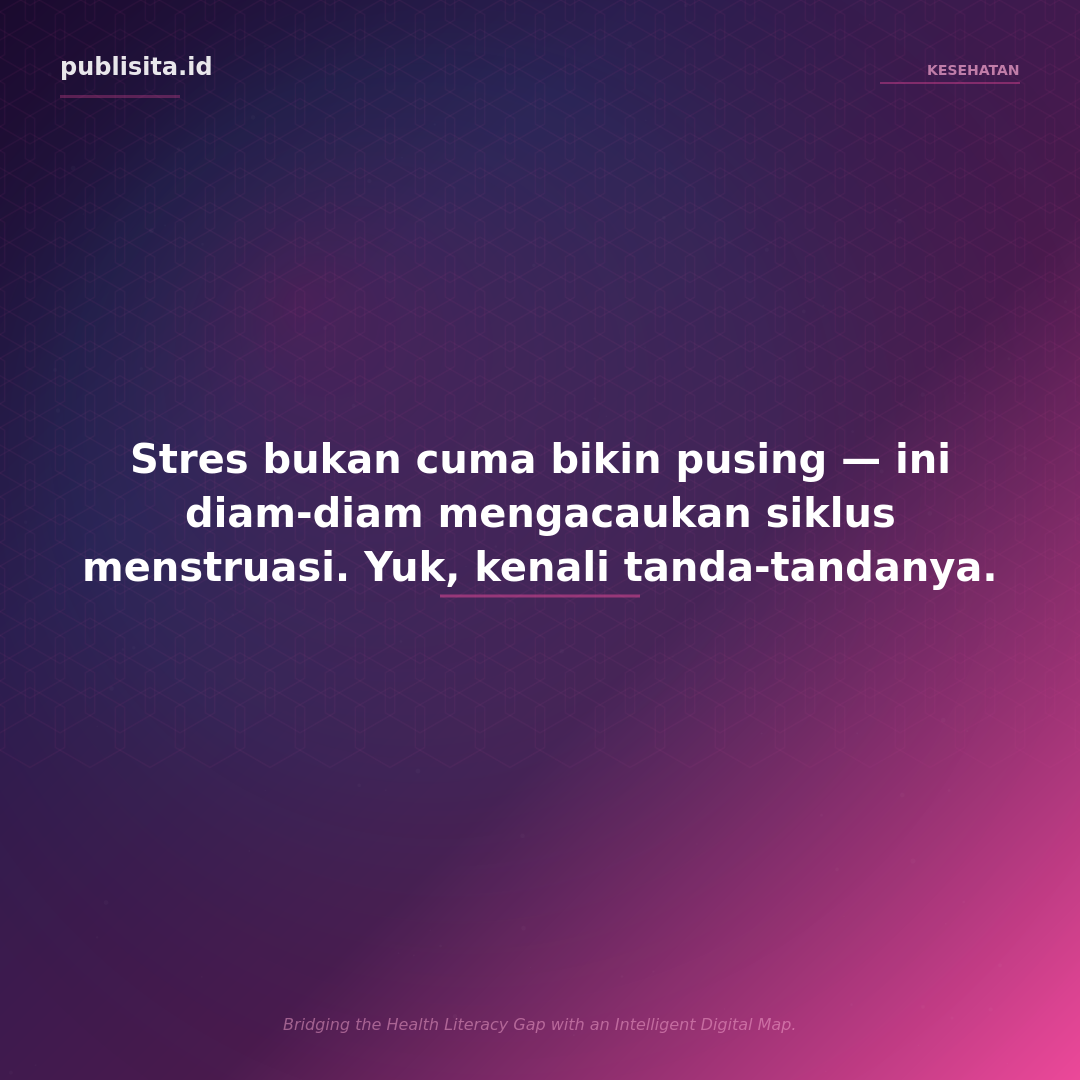
Kenapa Haid Telat? Dampak Stres pada Siklus Menstruasi
Pernah ngerasa siklus haid tiba-tiba berantakan pas lagi banyak pikiran? Kamu nggak sendiri. Stres ternyata punya pengaruh besar terhadap siklus menstruasi: saat kamu stres, tubuh memproduksi hormon kortisol yang bisa mengganggu sinyal ovulasi. Akibatnya, haid bisa telat, datang lebih cepat, atau bahkan nggak datang sama sekali. Yuk, pahami gimana stres kerja dan kenapa kamu perlu lebih perhatian sama kesehatan reproduksi kamu.
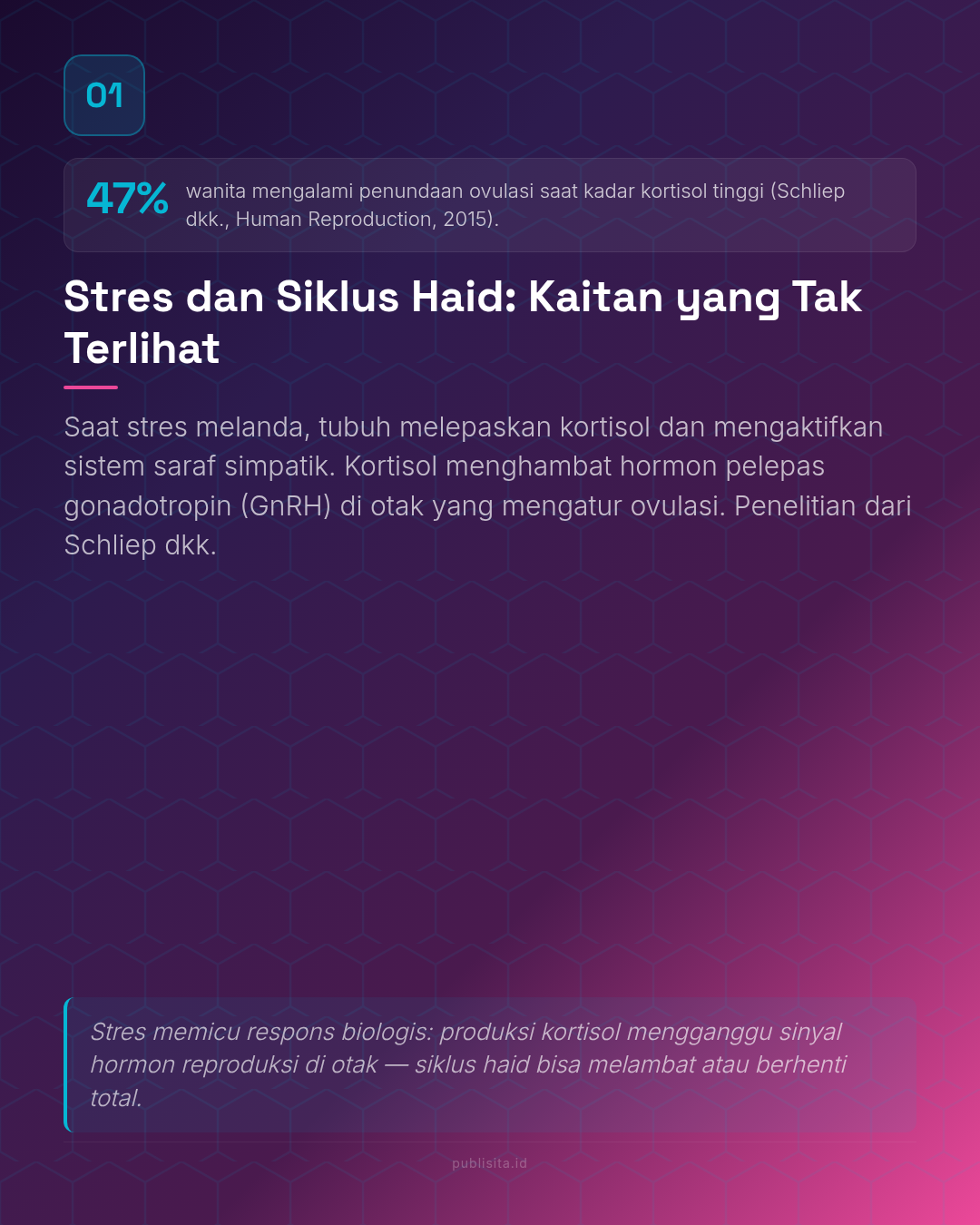
Stres Mengganggu Siklus Haid: Gimana Bisa?
Siklus haid itu sebenarnya dikendalikan oleh keseimbangan hormon yang rumit: kayak orkestra yang setiap alat musiknya harus main di waktu yang pas. Nah, stres datang dan bikin semuanya kacau. Stres bukan cuma bikin perasaan nggak enak, tapi secara langsung mengubah sinyal hormonal di tubuh kamu, mulai dari ovulasi sampai aliran darah haid. Di artikel ini, kita bakal bahas gimana caranya stres bikin siklus kacau, dari telat ovulasi sampai PMS yang makin parah.
Biar lebih gamblang: stres mengaktifkan sumbu HPA (hipotalamus-hipofisis-adrenal) di otak, yang kemudian memproduksi kortisol dan adrenalin: hormon “siaga” tubuh. Saat kadar stres naik, sumbu HPA ngasih sinyal ke hipotalamus buat ngerem produksi GnRH (gonadotropin-releasing hormone), yaitu hormon yang tugasnya merangsang ovulasi. Akibatnya? Ovulasi bisa tertunda atau bahkan berhenti total. Belum lagi stres juga bikin haid lebih sakit karena kram meningkat, dan kalau berlangsung lama, kortisol bisa menekan produksi estrogen: yang ujung-ujungnya bikin volume haid mengecil dan durasinya lebih pendek.
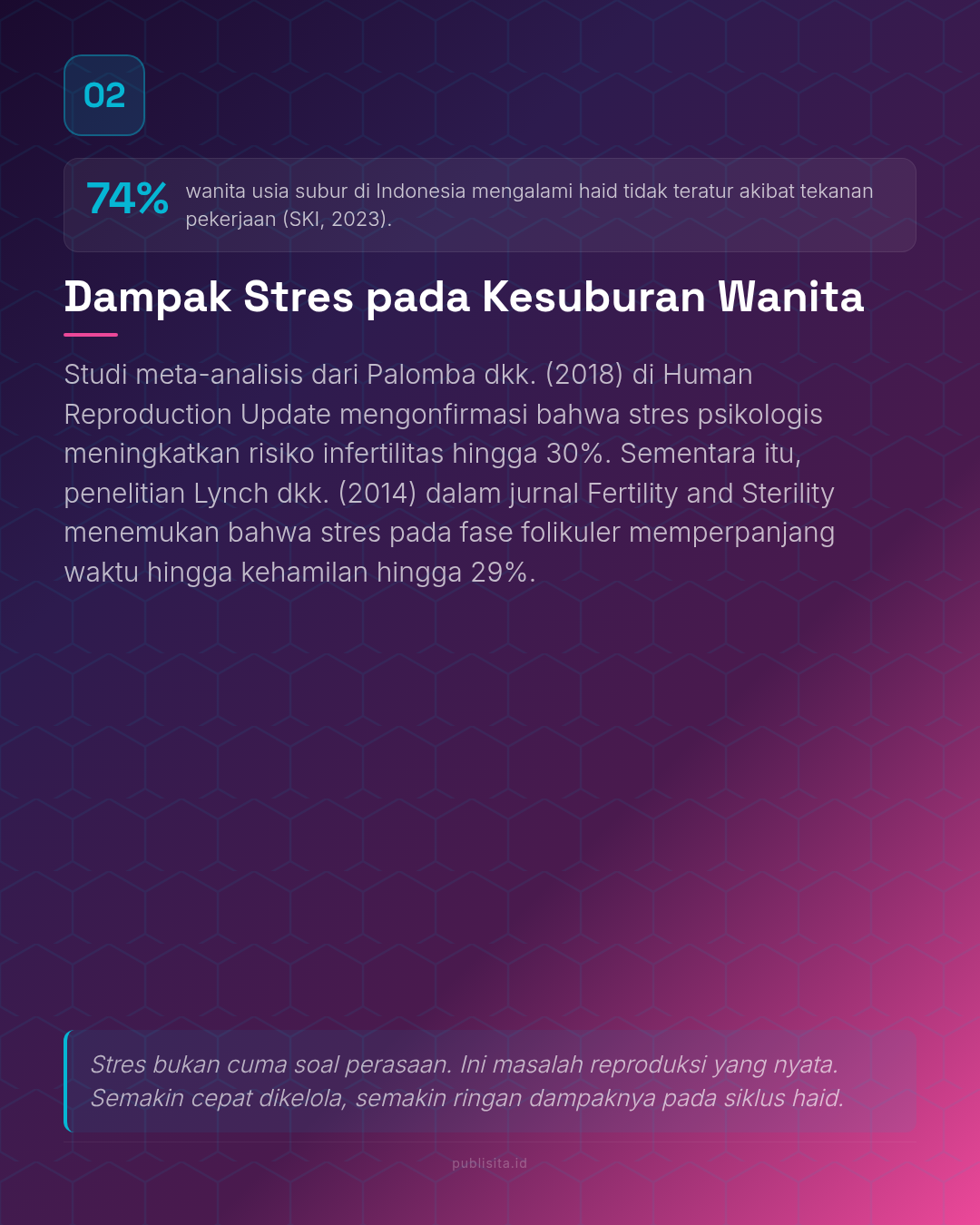
PMS juga nggak luput dari efek stres. Penelitian nemuin bahwa wanita dengan tingkat stres tinggi melaporkan gejala PMS yang jauh lebih parah. Stres juga bisa ningkatin kadar prolaktin: hormon yang ikut bikin siklus makin kacau. Yang lebih serius: wanita dengan kecemasan tinggi berisiko 4 kali lebih mungkin mengalami siklus haid yang sangat pendek atau sangat panjang. Buat yang penasaran sama mekanisme lengkapnya, bisa baca selengkapnya di panduan tentang stres dan siklus haid.
Kabar baiknya, kamu bisa bikin siklus haid kembali normal. Kuncinya ada di manajemen stres: olahraga teratur, tidur cukup, makan bergizi, dan latihan mindfulness kayak yoga atau meditasi: semuanya terbukti secara ilmiah bisa nurunin kortisol dan ngatur ulang sumbu HPA. Nggak perlu langsung drastis, mulai dari jalan kaki 20 menit sehari atau meditasi 5 menit sebelum tidur udah cukup buat bikin perubahan.
Tips penting: biasakan catat siklus haid kamu tiap bulan: pake aplikasi atau kalender biasa aja. Kalau ada perubahan signifikan yang berlangsung lebih dari 2-3 siklus, jangan ragu konsultasi ke dokter. Ingat, stres bukan satu-satunya penyebab haid telat. Kondisi lain kayak PCOS, gangguan tiroid, atau perubahan berat badan drastis juga bisa jadi biang keroknya. Makanya penting banget buat tahu riwayat kesehatan kamu sendiri.
Penutup
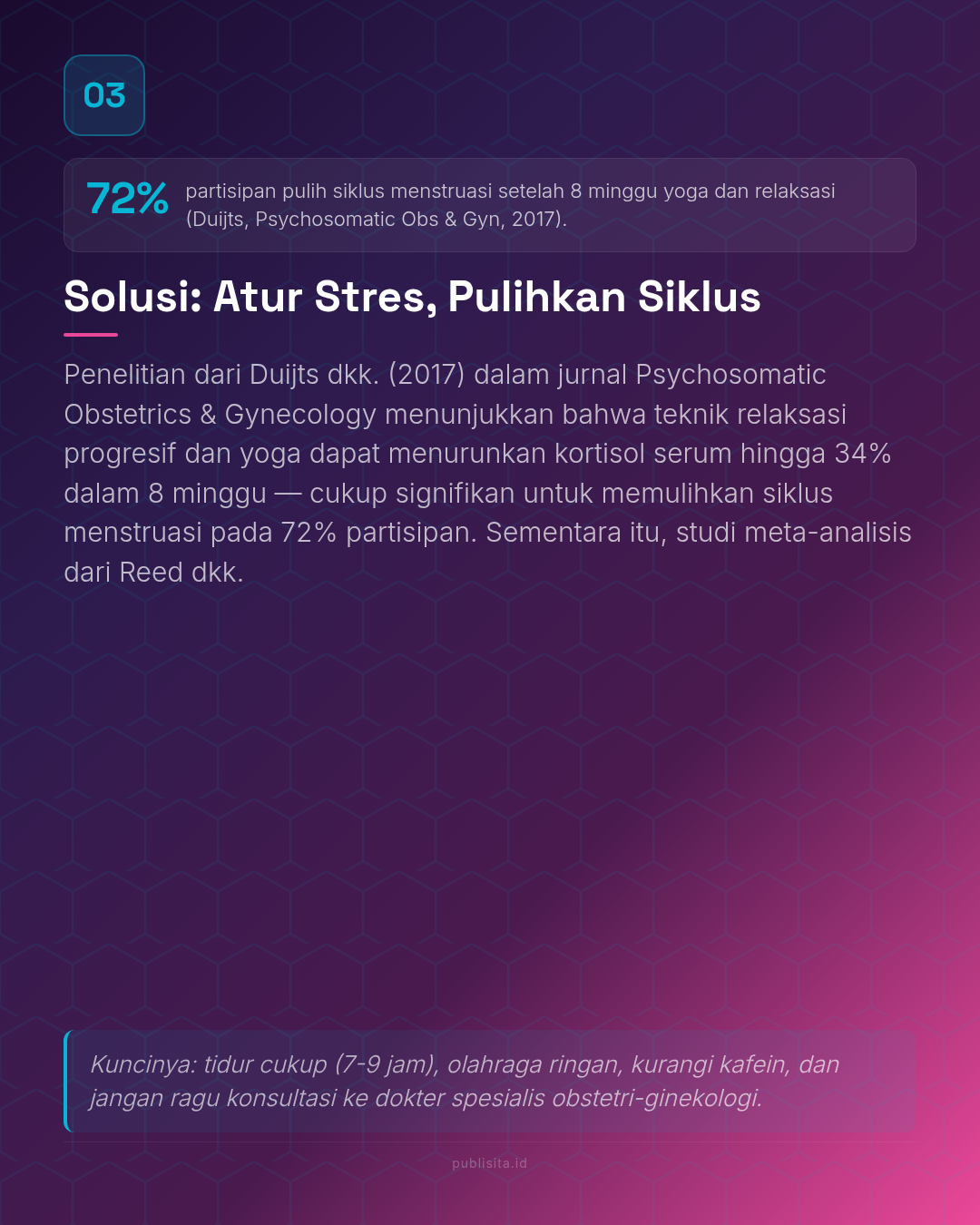
Intinya, stres punya dampak nyata pada siklus haid kamu, dan kabar baiknya, kamu punya kendali atas ini. Dengan menerapkan teknik manajemen stres dan gaya hidup sehat secara konsisten, kamu bantu tubuh kembali ke ritme alaminya. Mulai dari yang kecil dulu: tidur cukup, kurangi kafein, gerakin badan, dan jangan dipikirin sendiri. Kalau siklus masih berantakan setelah kamu coba tips di atas, saatnya konsultasi ke dokter kandungan ya.
